
How digital literacy can help combat food insecurity
Oscar Wong via Getty Images





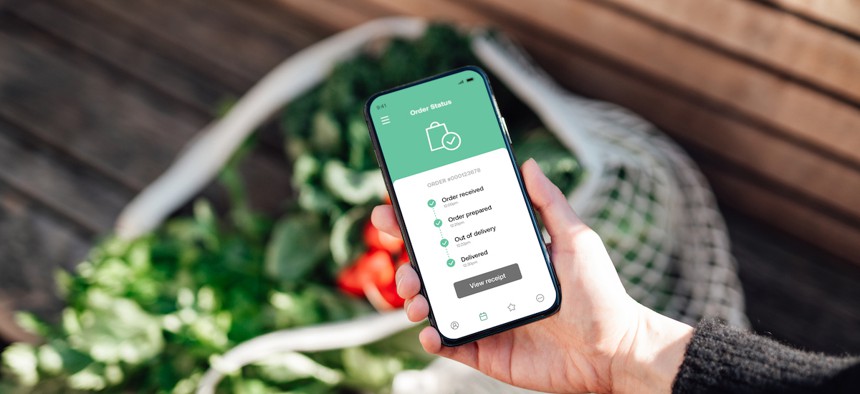
A new study explores how digital literacy support could lead to residents making healthier food purchases online.
Year after year, millions of U.S. families still struggle to put food on the table. Food insecurity, which affected an estimated 18 million households in 2023, has increasingly impacted families across the nation, particularly as food prices continue to climb.
Public benefits, like the Supplemental Nutrition Assistance Program, present one tool Americans can leverage to combat rising grocery costs. SNAP provides low-income families with financial assistance to buy groceries, but some experts say such benefits aren’t being used to their full potential.
For instance, while SNAP recipients are allowed to use their benefits toward online food purchases like grocery deliveries, beneficiaries may not be aware of that perk or may not buy as much fresh produce — such as fruit, vegetables and legumes — online, according to a new study released last week by New York University.
Whether a person leverages online grocery services through SNAP could depend on “their familiarity with or previous experience shopping for groceries online … [or] how confident they are in using the site,” said Angela Trude, an assistant professor of nutrition at NYU.
Researchers found that interventions like text reminders and video tutorials could help increase beneficiaries’ use of online grocery services by building their trust in and digital literacy with such tools, which can ultimately expand their access to more nutritious food options and combat food insecurity.
“Online shopping is growing in the whole country, but especially among people of low income,” Trude said. “It’s important that they actually have access to do so [regarding] financial access and the digital literacy support to actually get food for their families.”
In the study, researchers evaluated the online shopping behavior of residents in the Bronx borough of New York City because it had the highest poverty levels, obesity prevalence and ethnic diversity. Participants had children and were living at or below 130% of the federal poverty line, which was an annual income of about $35,000 for a family of four at the time.
The study results highlight the grocery shopping outcomes of 59 participants who were the primary food shoppers of their households from October to December 2022. The participants were randomly organized into four groups, all of which received at least an electronic gift card to waive delivery fees. Beyond the gift cards, three of the groups were each assigned additional interventions including weekly text messages aimed at building residents’ trust in online grocery services, weekly meal plans and grocery list recommendations, or $1 loaded to an electronic gift card for every fruit, vegetable or legume they purchased.
The study found that text messages helped build trust in the online service by, for example, teaching participants how to request reimbursements for purchases they weren’t satisfied with, which Trude said helped build users’ comfort with the digital platforms.
Through the video tutorials, participants learned how to redeem waivers for free delivery, find retailers that accepted SNAP, leverage the search function effectively and complete other tasks, she explained.
Survey results after the study concluded showed that participants were accepting of tech and digital interventions. For example, 82% of participants said that the text messages were somewhat or very helpful, and the same percentage of people said the tutorials for setting up an online grocery account and submitting an order were somewhat or very helpful, according to the study.
Researchers also found that the program had an impact on grocery shopping behavior among participants. After the interventions, for instance, grocery receipt data among the participants showed that the proportion of money they spent on fruits, legumes and vegetables increased from 20% to 21.6%, according to the study.
Nearly 50% of participants also created an online grocery account after the program concluded and reported a decrease of 0.6 points for food insecurity on an assessment tool from the U.S. Department of Agriculture, according to the study.
The findings suggest that implementing digital interventions can be a feasible solution for government leaders looking to improve residents’ access to food and public benefits, Trude said. Text reminders, in particular, offer a scalable and low-cost approach for expanding people’s awareness of SNAP benefits and their digital literacy for online services, according to the study.
Trude said the next step for researchers is to study the cost, efficacy and affordability of the four strategies explored in the recent report to help inform policymakers’ efforts to address food insecurity.
“Our goal is to level the playing field for families to access food,” Trude said, and if they do so through online delivery services, “we want them to be able to actually make use of it.”