Report: Better customer experience can smooth states’ rollout of new federal benefit requirements
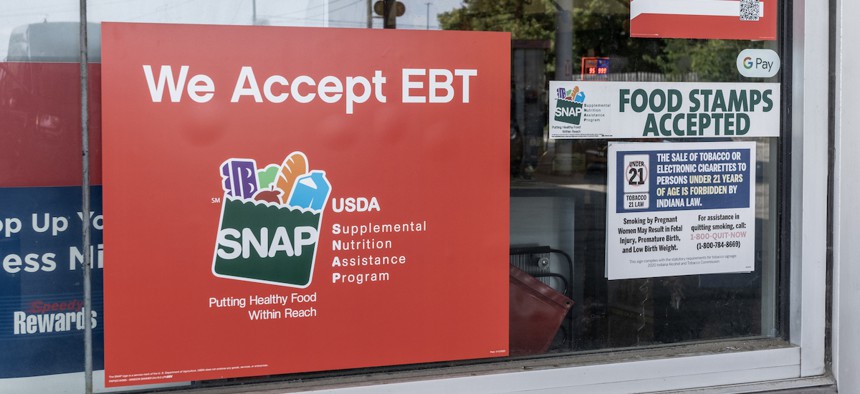
jetcityimage via Getty Images

A new report indicates that improving customer experience for those interacting with their benefit systems can help alleviate some pressure on states looking to upgrade them ahead of new federal rules.

Time is ticking for states to keep up with the federal governments’ changes to eligibility requirements to public benefit services like Medicaid and the Supplemental Nutrition Assistance Program. As states wait for official guidance to be established, many leaders are considering how to prepare their eligibility and enrollment systems for such changes. 

Since President Donald Trump signed the Big Beautiful Bill, or H.R. 1, in July, states have been subject to new and evolving rules for administering Medicaid and SNAP benefits. Differences in eligibility and payment rules, for example, are pushing states to consider how they can update their public benefit systems to comply with the changes. 

But the tight deadlines to do so and a lack of clear guidance thus far has created a challenge for state leaders. Officials are concerned that implementing any changes to their eligibility and enrollment systems now will have to be redone in the future but also that waiting until final rules are released will be a burden on their constrained resources and capacity, according to a report released this month from the Beeck Center for Social Impact and Innovation based on interviews with seven state officials. 

One state, for instance, “is cautiously making changes to its system in case any H.R. 1 requirements are rescinded by Congress or overturned by a court,” according to the report. 

A separate report from the nonprofit Civilla points to how states can lean on customer experience practices to help streamline the rollout of new Medicaid and SNAP provisions for agencies and residents. 

Beyond backend improvements like expanding interagency data sharing or implementing automation tools to streamline eligibility verification processes, states can leverage a human-centered approach to system changes to reduce their administrative burden, said Lena Selzer, chief operating officer and cofounder of Civilla. 

“Even with the best technical implementation for work requirements … millions of people are still going to need to take action on their cases in order to maintain coverage, and that means governments are going to need to bring real intention to how they communicate with residents [like] informing them of what changes are coming down the pike,” Selzer said.

Under H.R. 1, for instance, SNAP now includes work requirements for certain adults ages 18 to 64 years old, increasing the age of eligibility from 54 years old. The bill will also impact cost sharing between states and the federal government for SNAP over the next few years, with states having to increase their contributions based on their payment error rates. 

For Medicaid, states are expected to implement work requirements for the program by Dec. 31, 2026, but the Centers for Medicare and Medicaid Services is not slated to issue a final rule on the matter until June. 

In the meantime, states must consider how to relay those changing policies through clear and accessible messaging to residents through notices or on benefits applications themselves, Selzer said. 

“If they don’t do that, people will be calling, they’ll be visiting offices, they’ll be falling off their benefits and reapplying,” she explained. This issue creates “a real important opportunity for states to think about the customer experience and the customer relationship from the outset [and] to make sure that they're providing clarity to help residents who are eligible maintain their coverage, but also to relieve the burden from frontline staff,” Selzer said. 

Text reminders are a valuable tool for states to engage with residents about updates to their public benefits coverage, she said. 

“Communicating a new and complex policy like Medicaid work requirements is not a one-time task,” the report states. “Residents will need timely reminders to take action.” 

States can send automated text communications to remind beneficiaries to renew their coverage, for example, during times when their eligibility or enrollment may change, like a person’s birthday, Selzer said. Text notices can be particularly helpful to prompt beneficiaries to report their work hours under the new work requirement rules, according to the report. 

Text messages should include plain language by avoiding jargon typically used in formal policies like “premium” or “qualifying activities” and instead frame the message as a prompt to, for example, submit a required document before a deadline. 

To further streamline the process, the report recommends that text messages include links to the appropriate application and enrollment portals to reduce confusion or additional burden on residents to complete necessary tasks. 

States should also consider how to incorporate new eligibility questions into existing benefit application forms, Selzer said. 

For Medicaid work requirements, for example, states should consider adding questions to determine if a person is exempt from the rule at the start of an application to help residents work through the form more efficiently, according to the report. Such questions should also be grouped together in one section of the form, rather than scattered throughout the application, to prevent confusion. 

Applications should also include conditional logic-based questions, signaling to users which questions they must answer based on their response to previous prompts, to help avoid residents over-reporting or spending time to fill out unnecessary sections, according to the report. 

To expedite the data verification process for residents and agencies, states can ask for users’ consent to leverage other administrative records to confirm wage and identification data with a simple checkbox on the form, the report states. Officials can also consider forgoing requirements that people create an account to access benefit applications or portals in general, as this feature can create a barrier for some users, according to the report. 

Improving customer experience of public benefit programs, particularly at a time when tens of millions of people are at risk of losing their coverage under the proposed rule changes, can help states keep people enrolled in benefits and prevent them from losing coverage just because they struggled to navigate the new systems, Selzer said.

X
This website uses cookies to enhance user experience and to analyze performance and traffic on our website. We also share information about your use of our site with our social media, advertising and analytics partners. Learn More / Do Not Sell My Personal Information
Accept Cookies
X
Cookie Preferences Cookie List

Do Not Sell My Personal Information

When you visit our website, we store cookies on your browser to collect information. The information collected might relate to you, your preferences or your device, and is mostly used to make the site work as you expect it to and to provide a more personalized web experience. However, you can choose not to allow certain types of cookies, which may impact your experience of the site and the services we are able to offer. Click on the different category headings to find out more and change our default settings according to your preference. You cannot opt-out of our First Party Strictly Necessary Cookies as they are deployed in order to ensure the proper functioning of our website (such as prompting the cookie banner and remembering your settings, to log into your account, to redirect you when you log out, etc.). For more information about the First and Third Party Cookies used please follow this link.

Allow All Cookies

Manage Consent Preferences

Strictly Necessary Cookies - Always Active

We do not allow you to opt-out of our certain cookies, as they are necessary to ensure the proper functioning of our website (such as prompting our cookie banner and remembering your privacy choices) and/or to monitor site performance. These cookies are not used in a way that constitutes a “sale” of your data under the CCPA. You can set your browser to block or alert you about these cookies, but some parts of the site will not work as intended if you do so. You can usually find these settings in the Options or Preferences menu of your browser. Visit www.allaboutcookies.org to learn more.

Sale of Personal Data, Targeting & Social Media Cookies

Under the California Consumer Privacy Act, you have the right to opt-out of the sale of your personal information to third parties. These cookies collect information for analytics and to personalize your experience with targeted ads. You may exercise your right to opt out of the sale of personal information by using this toggle switch. If you opt out we will not be able to offer you personalised ads and will not hand over your personal information to any third parties. Additionally, you may contact our legal department for further clarification about your rights as a California consumer by using this Exercise My Rights link

If you have enabled privacy controls on your browser (such as a plugin), we have to take that as a valid request to opt-out. Therefore we would not be able to track your activity through the web. This may affect our ability to personalize ads according to your preferences.

Targeting cookies may be set through our site by our advertising partners. They may be used by those companies to build a profile of your interests and show you relevant adverts on other sites. They do not store directly personal information, but are based on uniquely identifying your browser and internet device. If you do not allow these cookies, you will experience less targeted advertising.

Social media cookies are set by a range of social media services that we have added to the site to enable you to share our content with your friends and networks. They are capable of tracking your browser across other sites and building up a profile of your interests. This may impact the content and messages you see on other websites you visit. If you do not allow these cookies you may not be able to use or see these sharing tools.

If you want to opt out of all of our lead reports and lists, please submit a privacy request at our Do Not Sell page.

Save Settings
Cookie Preferences Cookie List

Cookie List

A cookie is a small piece of data (text file) that a website – when visited by a user – asks your browser to store on your device in order to remember information about you, such as your language preference or login information. Those cookies are set by us and called first-party cookies. We also use third-party cookies – which are cookies from a domain different than the domain of the website you are visiting – for our advertising and marketing efforts. More specifically, we use cookies and other tracking technologies for the following purposes:

Strictly Necessary Cookies

We do not allow you to opt-out of our certain cookies, as they are necessary to ensure the proper functioning of our website (such as prompting our cookie banner and remembering your privacy choices) and/or to monitor site performance. These cookies are not used in a way that constitutes a “sale” of your data under the CCPA. You can set your browser to block or alert you about these cookies, but some parts of the site will not work as intended if you do so. You can usually find these settings in the Options or Preferences menu of your browser. Visit www.allaboutcookies.org to learn more.

Functional Cookies

We do not allow you to opt-out of our certain cookies, as they are necessary to ensure the proper functioning of our website (such as prompting our cookie banner and remembering your privacy choices) and/or to monitor site performance. These cookies are not used in a way that constitutes a “sale” of your data under the CCPA. You can set your browser to block or alert you about these cookies, but some parts of the site will not work as intended if you do so. You can usually find these settings in the Options or Preferences menu of your browser. Visit www.allaboutcookies.org to learn more.

Performance Cookies

We do not allow you to opt-out of our certain cookies, as they are necessary to ensure the proper functioning of our website (such as prompting our cookie banner and remembering your privacy choices) and/or to monitor site performance. These cookies are not used in a way that constitutes a “sale” of your data under the CCPA. You can set your browser to block or alert you about these cookies, but some parts of the site will not work as intended if you do so. You can usually find these settings in the Options or Preferences menu of your browser. Visit www.allaboutcookies.org to learn more.

Sale of Personal Data

We also use cookies to personalize your experience on our websites, including by determining the most relevant content and advertisements to show you, and to monitor site traffic and performance, so that we may improve our websites and your experience. You may opt out of our use of such cookies (and the associated “sale” of your Personal Information) by using this toggle switch. You will still see some advertising, regardless of your selection. Because we do not track you across different devices, browsers and GEMG properties, your selection will take effect only on this browser, this device and this website.

Social Media Cookies

We also use cookies to personalize your experience on our websites, including by determining the most relevant content and advertisements to show you, and to monitor site traffic and performance, so that we may improve our websites and your experience. You may opt out of our use of such cookies (and the associated “sale” of your Personal Information) by using this toggle switch. You will still see some advertising, regardless of your selection. Because we do not track you across different devices, browsers and GEMG properties, your selection will take effect only on this browser, this device and this website.

Targeting Cookies

We also use cookies to personalize your experience on our websites, including by determining the most relevant content and advertisements to show you, and to monitor site traffic and performance, so that we may improve our websites and your experience. You may opt out of our use of such cookies (and the associated “sale” of your Personal Information) by using this toggle switch. You will still see some advertising, regardless of your selection. Because we do not track you across different devices, browsers and GEMG properties, your selection will take effect only on this browser, this device and this website.