
California city taps AI to improve public bus service and increase ridership
Steve Proehl via Getty Images




An artificial intelligence-enabled traffic system is helping San Jose better serve residents using public transportation.
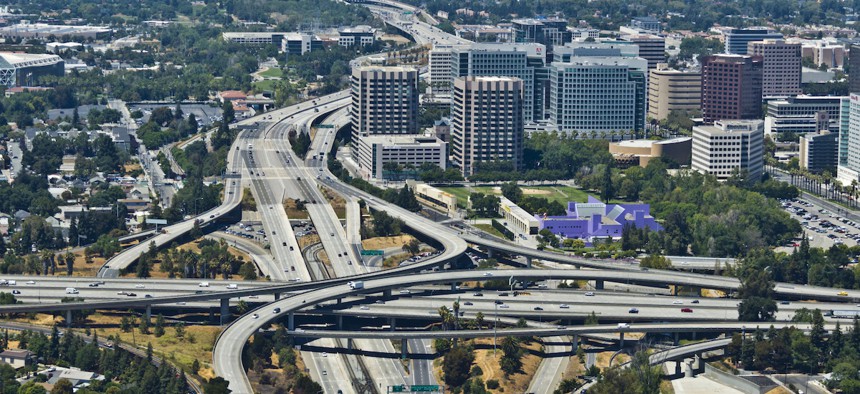
A major indicator of local government performance is how well transportation services run, according to San Jose, California’s chief innovation officer and budget director, Stephen Caines. That’s why officials in his city have deployed a traffic signal system aimed at shuffling public transit buses more efficiently through congested intersections.
With nearly 1 million residents bustling around a city that covers 182 square miles, “a lot of San Jose residents spend either a lot of time in the car or using other methods of transportation,” said Caines. “When it comes to ways that city hall can specifically improve the lives of our residents, we really see transportation as one of those topics that uniquely touches almost every single resident in our city.”
To enhance traffic flow and enhance public transportation experiences for people in San Jose, city officials have expanded a traffic signal system to all 24 bus routes across the city that leverages artificial intelligence and real-time traffic data to prioritize green light signals for public buses. The city is leveraging traffic technology from the company LYT.
The expansion comes after a 2023 pilot program where the traffic signal system was deployed along two bus routes, resulting in a 50% reduction in stalling at red lights and improved on-time arrivals for buses, Caines said.
Driving the enhanced public transit bus performance is a network of transponder devices in the vehicles that communicate with the city’s traffic signal system to adjust red and green lights as needed, he said. Since the citywide expansion, the AI-enabled system has increased bus travel speeds by 20%.
City officials hope a more accurate and efficient bus system will shorten wait times for bus riders and encourage more residents to leverage public transportation options, which is associated with environmental impacts like reduced carbon emissions, healthier air quality and slowed climate change.
The traffic signal initiative helps advance the city council’s commitment to become a “transit
first city, meaning when we design our transportation systems, we will give priority to buses and other high occupancy vehicles over single occupancy,” Caines explained, referring to a 2022 memorandum that aims to support “a better experience for transit riders and increased transit ridership.”
The traffic signal system can also “provide more data for a very dense and evolving transportation ecosystem” that informs transportation officials of potential tech, road conditions or personnel issues that disrupt normal bus services and arrival times, Caines said. If a bus’s signal, for instance, indicates it is running behind schedule, city staff “may be able to detect issues before [residents] report them,” he said.
Leveraging AI to improve public transit service builds upon the city’s recent efforts to revamp government operations broadly with the technology, including incorporating AI into the city’s permitting system, establishing an AI upskilling program for municipal employees and implementing AI into waste management services.
“If you want to know how well a city’s government is working, look at the basics — how buses run, how parks are taken care of, how fast potholes are filled,” San Jose Mayor Matt Mahan said in a statement. “In San Jose, we’re finding innovative solutions to make our bus routes faster and more reliable — saving our commuters and working families time and proving that local government can deliver results where it matters most.”