
Data is the building block to better government, Philadelphia official says
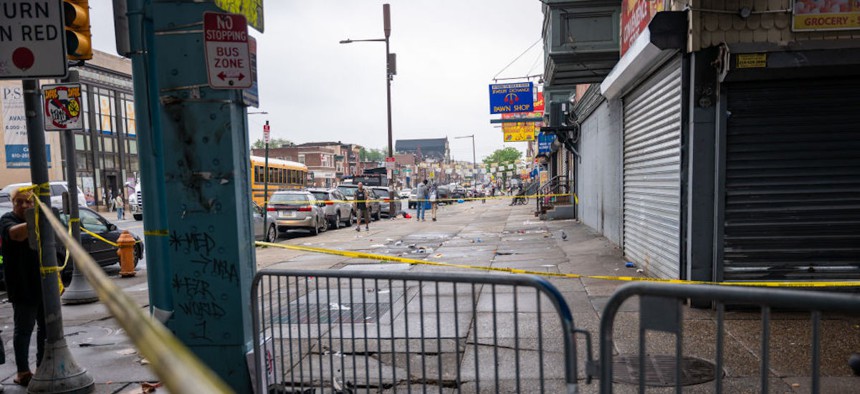
Police lock down part of Kensington Avenue during the clearing of a homeless encampment in the Kensington neighborhood on May 8, 2024, in Philadelphia. Spencer Platt/Getty Images






Philadelphia wants to revitalize one of its poorest neighborhoods and is leaning on data to keep officials accountable to the public throughout the process.
The city of Philadelphia is embarking on a mission to revive one of its most historically underinvested communities, and open and transparent data will be key to drive that change, one city official says.
Kensington has garnered headlines and a reputation for being a problematic community where its open-air drug market, high poverty rates and lack of jobs and employment have deteriorated the neighborhood for decades, said Kristin Bray, chief legal counsel to Philadelphia Mayor Cherelle Parker and director of the city’s Philly Stat 360.
Parker is prioritizing the revitalization of Kensington by addressing gaps in housing conditions and supply, health and wellness services, infrastructure and other areas, Bray said. Plus, improving conditions in Kensington could have ripple effects in other communities in need of revitalization.
To guide the city’s efforts in Kensington, Philadelphia launched a suite of dashboards that will help city officials and policymakers identify where they are being effective in revitalizing the neighborhood and enhancing service delivery to residents, but also highlight areas for improvement, Bray said.
There are problems and challenges in big cities like Philadelphia, "but I think it is important for the public to see that," Bray said. By visualizing the city’s pain points, “it brings out transparency and accountability,” she explained. The site, for example, also includes contact information for residents to provide input on the resources and connect with city organizations for further assistance.
The city is leveraging Esri’s ArcGIS platform to map the data and offer additional graphics to showcase the agencies’ efforts to implement critical services and address community complaints across city operations. Users can explore stats across four categories: community, public safety, quality of life and wellness.
The Kensington dashboards include a map of resources like free meal sites, public Wi-Fi locations, parks and mental and behavioral treatment facilities in the Kensington neighborhood. On the public safety dashboard, users can track trends in property and violent crimes and the city’s law enforcement efforts. For example, the dashboard tracks total arrests made by police and cash seized from drug activity within the community.
The quality of life and wellness tabs offer more insights on the city’s progress toward connecting residents with city services. The former dashboard, for example, tracks how the city is addressing property improvements across Philadelphia. That data includes monitoring of how many inspections, demolitions or repairs are occurring and their completion status. The wellness dashboard also has more granular metrics, like how many people the city was able to place in shelters, drug overdose and abuse support programs and medical treatment.
The dashboards include data from several city entities, including the Office of Public Safety, Office of Homeless Services, Office of Education, Department of Revenue, Department of Sanitation and others, “and to get all those data sets in and try to visualize them in a way that anyone in the city can understand [it] is incredibly important” to Philadelphia officials,” Bray said.
Some city agencies, such as the police department and the Department of Licenses and Inspections, provide data to the dashboard through an API, Bray said. Agencies with less mature data infrastructure are receiving support to “put their data into more conformed systems,” Bray explained.
The Kensington dashboard builds upon the city’s efforts to increase transparency and accountability for government operations. In 2024, city officials launched Philly Stat 360, a website that tracks and monitors the city’s progress on service delivery and programs.
Bray said the city plans to expand the neighborhood-level dashboard to include citywide insights by the end of the year.
“This is about demystifying government, and … really trying to get at the heart of the matter of what government is doing and what they’re not doing helps people better participate in the civic process,” Bray said. “That’s where giving people real-time data, and giving them it in an easy to understand fashion helps to have civic engagement and accountability, and at the end of the day, better government.”