
Local Ohio agency invests in worker safety with wearable panic buttons
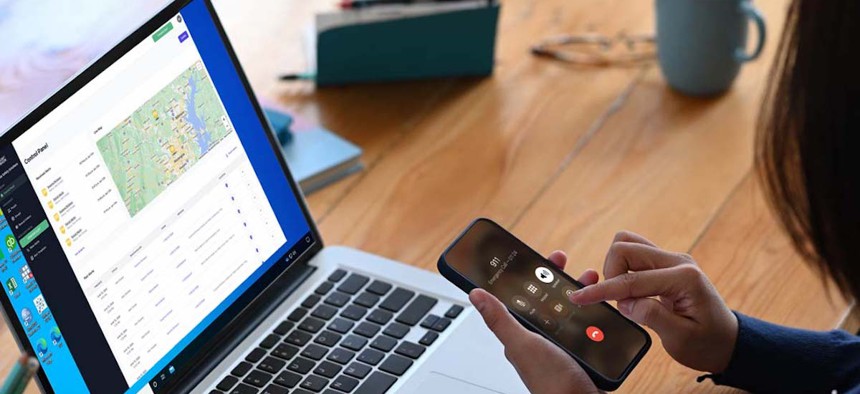
Photo courtesy of Silent Beacon






With wearable devices, staff at the Clermont County Veterans’ Service Commission feel more confident and secure interacting with clients, one official says.
Workplace safety is increasingly a concern among U.S. employees, with 90% of respondents to a recent survey from training company Traliant saying higher-ups should do more to address their apprehension. One local agency in Ohio is turning to tech to strengthen safety measures for their staff and streamline emergency responses when necessary.
The Clermont County Veterans’ Service Commission — about 24 miles east of Cincinnati — adopted an emergency alert system last December that enables staff to notify authorities when they feel unsafe or need assistance interacting with a client, said Stephen Balczo, the agency’s executive director.
The agency provides assistance and service to support veterans in the community, including connecting veterans to benefits and compensation from the Veterans Affairs Department. The Ohio office also offers free transportation to medical appointments and emergency financial assistance to veterans for resources like food, utility or housing needs.
“You can anticipate the anxiety of people that come into the office,” Balczo said. Those people can become further agitated during an interaction if, for example, they are denied compensation or emergency financial assistance.
“We’ve run into occasions where veterans become volatile [because] they’re upset or they’re angry,” he said.
The agency has also implemented other safety measures like a bulletproof glass wall separating the lounge area from the individual offices where staff interact with veterans. The facility requires clients to leave their bags or other belongings in lockers before going back into the offices. And before deploying the Silent Beacon system, the office receptionist desk had a panic button for staff to press, but it could take days for maintenance to reset it once it was activated, Balczo said.
While these measures are helpful, their impact is limited. Because the offices are closed off and built with sound absorption to protect client’s privacy when they share personally identifiable information, the receptionist or other staff may not hear a conversation start to escalate, he explained.
With the Silent Beacon system, staff can alert Balczo or directly contact 911 using a wearable device, like a smart watch. Staff can press a button on it that sends the user’s GPS position and a notification to a cloud-based dashboard Balczo uses to monitor an employee’s location and manage alerts and response coordination.
Users can also use the devices to communicate with responders or enable a silent setting in case they do not want the person they’re interacting with to know that other authorities have been contacted, he explained.
All 19 of the agency’s employees have access to the panic-button devices, and their location is only viewable when they activate an emergency alert or if they choose to share it, to ensure privacy throughout the day, Balczo said.
“The good news is we’ve never had to request 911 since we’ve had these buttons,” he said. But simply the presence of the safety buttons has improved staff’s comfort in doing their work, because “when you start installing these security measures for them, and they see that leadership is doing something on behalf of [their safety], their attitude, confidence and teamwork picks up,” he explained.
“The return on investment to me is … the fact people feel safe coming to work,” Balczo said.