
States tackle transparency in early responses to workplace surveillance tech
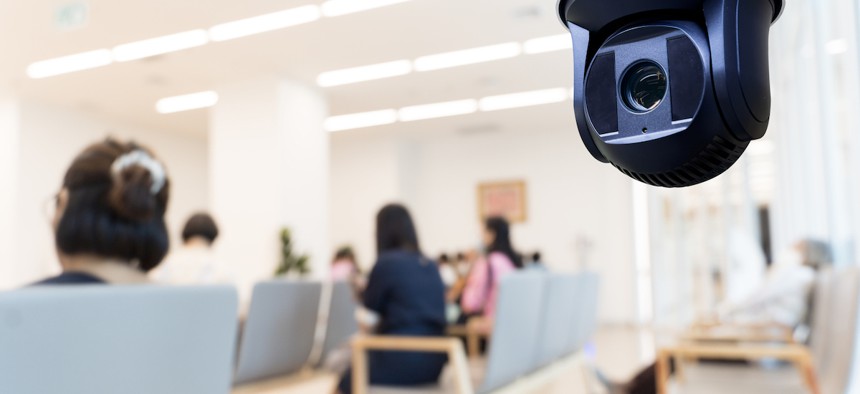
jittawit.21 via Getty Images






As employee-monitoring tech gains traction in workplaces across the U.S., experts say policymakers must ensure such services are deployed transparently and responsibly.
There are few places left in the U.S. that don’t have some sort of technology tracking a person’s movement, whether that be driving past license plate readers, passing by a doorbell camera or using social media on their cell phones. Surveillance tools have also permeated many workplaces across the nation, but state lawmakers are increasingly establishing employee privacy protections to prevent potential harms and abuse of such monitoring tech.
Maine became the latest state to take legislative action against surveillance and monitoring tools in the workplace. State lawmakers enacted a law in January aimed at increasing transparency of public and private employers’ use of computers, telephones, photo-electronic systems and other devices to monitor their staff.
The law prohibits employers from deploying such systems without notifying prospective workers and requires them to also provide annual notice to all employees impacted by surveillance systems. Under the legislation, workers also have the right to decline their employer’s request to install tracking and data collection tools on personal devices for surveillance purposes.
Maine’s efforts reflect a growing trend among policymakers to reign in the rise of workplace surveillance technology, said Edgar Ndjatou, executive director of Workplace Fairness, a nonprofit dedicated to researching and promoting workers’ rights.
“In the past decade, [particularly] with COVID-19 and people working more remotely, employers got very nervous around productivity and what people were doing or not doing at home,” he said.
The desire to maintain productivity led to a rise of “bossware, or software that employers use to monitor you, whether it’s monitoring … how many emails you’re opening, accessing your computer camera to see if you’re actually working when you say you’re working … or monitoring your keystrokes to see if you’re actually being productive throughout the work day,” he explained.
State and local governments in particular could be drawn to deploying surveillance tech as they “face budget crunches,” so “using monitoring [tools] to make sure you’re getting the biggest bang for your buck out of your workers” or “to augment workplace functions,” like monitoring performance or flagging worker behavior that requires discipline,” said Hayley Tsukayama, director of state affairs at the Electronic Frontier Foundation, a digital rights nonprofit.
As employers increasingly turn to tech services to regulate the workplace, states are also beginning to “catch up or at least trying to address a trend that has become really clear in the workplace over the past few years,” she said.
At least three states, including Connecticut, Delaware and New York, already mandate that employers notify employees when their phone, email or internet usage may be subject to monitoring.
As more state leaders take legislative action to regulate workplace monitoring, policymakers are targeting transparency measures in their early adoption of workplace surveillance laws, Tsukayama said.
In Michigan, Rep. Penelope Tsernoglou, a Democrat, proposed a bill last month that would allow employers to deploy electronic monitoring tools — including computers, cameras, telephones and other devices — for purposes like assessing certain employees’ performance or monitoring production processes or quality.
If passed, the bill includes several measures to prevent potential harm and abuse of workplace monitoring tech, such as requiring employers to provide written notice that they are subject to monitoring tools, to obtain written consent from staff subject to electronic monitoring and to allow individuals to correct any incorrect data collected about them.
More broadly, the bill directs employers to leverage a monitoring service “through the least invasive means possible” and “ensure the tool applies to the smallest number of covered individuals, collects the least amount of data, and is used no more frequently than necessary.”
A similar effort was underway in California last year, after lawmakers considered a bill that would have restricted public and private sector employers’ use of surveillance tools.
Under the bill, which died on the state’s Senate floor in September, employers would have been prohibited from leveraging video, audio, geolocation and other data tracking methods for monitoring staff productivity and performance in “employee-only, employer-designated” environments, like break rooms, off-duty situations, locker rooms and other spaces. Employers would also have been required to post signage in certain instances to notify staff if they were subject to certain surveillance tools.
California lawmakers are now considering a separate law introduced last month that would limit public and private employers’ use of surveillance tools and employee data to inform decisions that would impact their performance evaluation, productivity requirements, compensation and other factors.
Indeed, the adoption of surveillance tools opens the door for employers to analyze employee data more closely, which is why “I really encourage employers [and policymakers] to consider how damaging these technologies can be if it’s not rolled out transparently,” Tsukayama said.