Voters approve digitized New York City map amid affordable housing push
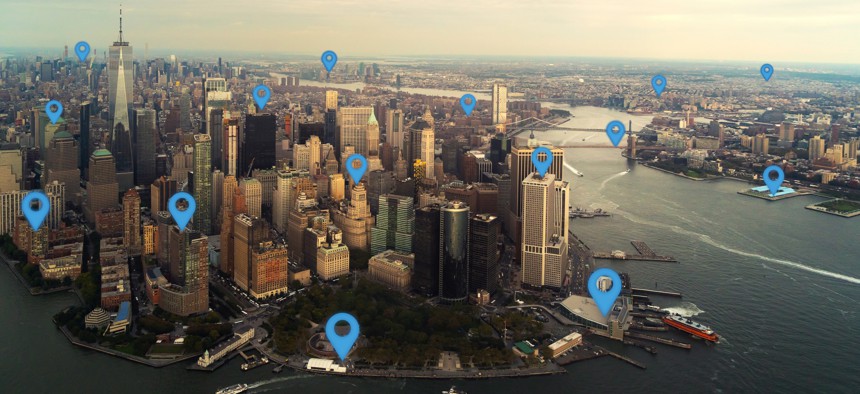
Prasit photo via Getty Images


Supporters said the new map, which was approved overwhelmingly last week, will help speed up approvals of new housing and development projects. Opponents warned it would centralize power away from the five boroughs.

New York City voters last week comfortably approved an amendment to the city charter that would for the first time require the city to consolidate and digitize its city map, in an effort supporters said would help boost its housing supply.

More than 70% of voters agreed to amend the City Charter to require that the borough map office be consolidated and to create a centralized digital city map at the Department of City Planning. Right now, the city map exists as around 8,000 individual paper maps that are administered separately by each borough, resulting in differences in terminology, symbols and even height measurements.

The vote was part of a broader effort to amend the City Charter, which outgoing Mayor Eric Adams kicked off in Dec. 2024 with the creation of the current New York City Charter Revision Commission. In their final report, commissioners said having a more unified approach will help get development projects built more quickly, especially as “startlingly anachronistic methods can impose significant costs in time and money on infrastructure, housing, and other projects (both public and private) that require confirmation of, or changes to, the City Map.”

“Confirmation of jurisdiction for an infrastructure project in a waterfront area, where coastlines have changed over time and property records can be spotty, can require a physical trip to consult fragile canvas maps from over 100 years ago,” the report says. “A street demapping for an [New York City Department of Housing Preservation and Development]-sponsored affordable housing project can add close to a year of additional time, even for projects that are already going through [public review].”

Maintaining the city map has been the role of the city’s Borough presidents through their respective Topographical Offices since 1901. But the commission’s report noted that any map changes face a “long queue” at those offices due to the work involved and a lack of staff, meaning there are likely only three or four changes made a year. And the city’s planning department has taken on most land use functions formerly held by Borough Presidents since 1963.

“Routine alterations can take years to get to the starting line,” the report says. “The queue is also unpredictable, since priorities of the Mayor, Borough President, or other officials may bump private applicants to the end of the line. The length and complexity of this process has rendered City Map changes perhaps the most feared [review] actions among private applicants.”

Digitizing the map would also help “modernize a small but important corner of City government that creates significant headaches for urgent infrastructure, housing, and other projects,” the commission report said. That part of things would require each of the 8,000 or so paper city maps to be collected and scanned, but the whole effort will not be easy.

“Consolidating the borough maps into a unified City Map is not a task that can be accomplished in an instant,” the report says. “DCP staff estimate it will take approximately 18 months to translate the borough maps into a unified language and scan pre-1938 maps — that is, maps from before DCP’s creation — that exist only in paper form in borough Topographical Bureaus.”

While the proposal appeared very popular among New York City voters, it had its detractors. City Councilmember Robert Holden said in a statement the digital map “sounds helpful, but this measure is vague on cost, privacy, and who gets to change it.”

Staten Island Borough President Vito Fossella, meanwhile, warned that centralizing the city map would “make it harder for residents and businesses to get quick, accurate help.”

And he said the borough presidents’ offices have “vital” functions that would be lost under this proposal, including maintaining the maps, assigning and verifying addresses, providing mapping data for surveyors, public and agency access to the maps and reviewing alterations. He called it a “power grab” that would undermine “our voice when it comes to land use.”

“It sounds like a small update, but it could mean big changes for how the city runs,” Fossella wrote in a Facebook post before Election Day. “[If] passed, this proposal would strip away every borough’s voice in city governance — leaving land use issues in the hands of a faceless city agency with no relation or understanding of each borough’s specific needs and geography.”

In response to those allegations, the charter commission said it will rely on the borough offices’ expertise even when the map is centralized. And it said those offices will not be required to close, but instead would offer them “additional flexibility” by removing the requirement that they have a mapping bureau staffed by a professional engineer.

Under the commission’s proposal, the city map would be consolidated by Jan. 1, 2028, then set a deadline of Jan. 1, 2029, for a digital map to enter the city’s review process. If it passes muster, the digital city map would then be the source for planning reviews and approvals, rather than paper maps.

X
This website uses cookies to enhance user experience and to analyze performance and traffic on our website. We also share information about your use of our site with our social media, advertising and analytics partners. Learn More / Do Not Sell My Personal Information
Accept Cookies
X
Cookie Preferences Cookie List

Do Not Sell My Personal Information

When you visit our website, we store cookies on your browser to collect information. The information collected might relate to you, your preferences or your device, and is mostly used to make the site work as you expect it to and to provide a more personalized web experience. However, you can choose not to allow certain types of cookies, which may impact your experience of the site and the services we are able to offer. Click on the different category headings to find out more and change our default settings according to your preference. You cannot opt-out of our First Party Strictly Necessary Cookies as they are deployed in order to ensure the proper functioning of our website (such as prompting the cookie banner and remembering your settings, to log into your account, to redirect you when you log out, etc.). For more information about the First and Third Party Cookies used please follow this link.

Allow All Cookies

Manage Consent Preferences

Strictly Necessary Cookies - Always Active

We do not allow you to opt-out of our certain cookies, as they are necessary to ensure the proper functioning of our website (such as prompting our cookie banner and remembering your privacy choices) and/or to monitor site performance. These cookies are not used in a way that constitutes a “sale” of your data under the CCPA. You can set your browser to block or alert you about these cookies, but some parts of the site will not work as intended if you do so. You can usually find these settings in the Options or Preferences menu of your browser. Visit www.allaboutcookies.org to learn more.

Sale of Personal Data, Targeting & Social Media Cookies

Under the California Consumer Privacy Act, you have the right to opt-out of the sale of your personal information to third parties. These cookies collect information for analytics and to personalize your experience with targeted ads. You may exercise your right to opt out of the sale of personal information by using this toggle switch. If you opt out we will not be able to offer you personalised ads and will not hand over your personal information to any third parties. Additionally, you may contact our legal department for further clarification about your rights as a California consumer by using this Exercise My Rights link

If you have enabled privacy controls on your browser (such as a plugin), we have to take that as a valid request to opt-out. Therefore we would not be able to track your activity through the web. This may affect our ability to personalize ads according to your preferences.

Targeting cookies may be set through our site by our advertising partners. They may be used by those companies to build a profile of your interests and show you relevant adverts on other sites. They do not store directly personal information, but are based on uniquely identifying your browser and internet device. If you do not allow these cookies, you will experience less targeted advertising.

Social media cookies are set by a range of social media services that we have added to the site to enable you to share our content with your friends and networks. They are capable of tracking your browser across other sites and building up a profile of your interests. This may impact the content and messages you see on other websites you visit. If you do not allow these cookies you may not be able to use or see these sharing tools.

If you want to opt out of all of our lead reports and lists, please submit a privacy request at our Do Not Sell page.

Save Settings
Cookie Preferences Cookie List

Cookie List

A cookie is a small piece of data (text file) that a website – when visited by a user – asks your browser to store on your device in order to remember information about you, such as your language preference or login information. Those cookies are set by us and called first-party cookies. We also use third-party cookies – which are cookies from a domain different than the domain of the website you are visiting – for our advertising and marketing efforts. More specifically, we use cookies and other tracking technologies for the following purposes:

Strictly Necessary Cookies

We do not allow you to opt-out of our certain cookies, as they are necessary to ensure the proper functioning of our website (such as prompting our cookie banner and remembering your privacy choices) and/or to monitor site performance. These cookies are not used in a way that constitutes a “sale” of your data under the CCPA. You can set your browser to block or alert you about these cookies, but some parts of the site will not work as intended if you do so. You can usually find these settings in the Options or Preferences menu of your browser. Visit www.allaboutcookies.org to learn more.

Functional Cookies

We do not allow you to opt-out of our certain cookies, as they are necessary to ensure the proper functioning of our website (such as prompting our cookie banner and remembering your privacy choices) and/or to monitor site performance. These cookies are not used in a way that constitutes a “sale” of your data under the CCPA. You can set your browser to block or alert you about these cookies, but some parts of the site will not work as intended if you do so. You can usually find these settings in the Options or Preferences menu of your browser. Visit www.allaboutcookies.org to learn more.

Performance Cookies

We do not allow you to opt-out of our certain cookies, as they are necessary to ensure the proper functioning of our website (such as prompting our cookie banner and remembering your privacy choices) and/or to monitor site performance. These cookies are not used in a way that constitutes a “sale” of your data under the CCPA. You can set your browser to block or alert you about these cookies, but some parts of the site will not work as intended if you do so. You can usually find these settings in the Options or Preferences menu of your browser. Visit www.allaboutcookies.org to learn more.

Sale of Personal Data

We also use cookies to personalize your experience on our websites, including by determining the most relevant content and advertisements to show you, and to monitor site traffic and performance, so that we may improve our websites and your experience. You may opt out of our use of such cookies (and the associated “sale” of your Personal Information) by using this toggle switch. You will still see some advertising, regardless of your selection. Because we do not track you across different devices, browsers and GEMG properties, your selection will take effect only on this browser, this device and this website.

Social Media Cookies

We also use cookies to personalize your experience on our websites, including by determining the most relevant content and advertisements to show you, and to monitor site traffic and performance, so that we may improve our websites and your experience. You may opt out of our use of such cookies (and the associated “sale” of your Personal Information) by using this toggle switch. You will still see some advertising, regardless of your selection. Because we do not track you across different devices, browsers and GEMG properties, your selection will take effect only on this browser, this device and this website.

Targeting Cookies

We also use cookies to personalize your experience on our websites, including by determining the most relevant content and advertisements to show you, and to monitor site traffic and performance, so that we may improve our websites and your experience. You may opt out of our use of such cookies (and the associated “sale” of your Personal Information) by using this toggle switch. You will still see some advertising, regardless of your selection. Because we do not track you across different devices, browsers and GEMG properties, your selection will take effect only on this browser, this device and this website.