
New Jersey leverages platform to help adults go back to school

gorodenkoff via Getty Images



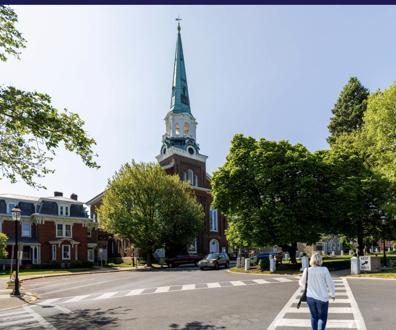

The state partnered with ReUp Education to offer adult learners to a platform to access resources and services that help them complete their degrees.
New Jersey is on a mission to get more people back into college with the ultimate goal of boosting economic growth and strengthening the state’s workforce. The state leveraged a platform to connect institutions with adult learners beginning in 2023, and a new report shows that the initiative can offer the state valuable insights to support their goal.
Across New Jersey, an estimated 840,000 residents have earned some college credits but discontinued their education before receiving a degree, according to a report released this week from ReUp Education.
The New Jersey Office of the Secretary of Higher Education partnered with ReUP in 2022 to help such individuals return to school and earn their education credentials. In 2023, ReUP launched a statewide marketplace for adult learners to leverage resources that support their education and career goals.
Through the marketplace, students can access a platform that offers information about various education institutions and programs participating in the state’s re-enrollment initiative. Learners can also access individualized coaching and re-enrollment plans via call, text or email that accommodate their life circumstances. The marketplace, for example, offers a multiyear re-engagement option for students who face barriers to returning to school, like balancing family or work responsibilities, according to the report.
More than 13,500 people have re-enrolled in secondary education institutions as of December, according to the report. Of those who have re-enrolled in education, more than 1,400 New Jerseyans have completed their degree. Twenty-two higher education institutions have participated in the program and regained about $74 million in tuition revenue.
“This statewide approach allows for common messaging and outreach, as opposed to a fragmented strategy where each institution is responsible for outreach on their own,” said New Jersey Secretary of Higher Education Brian Bridges in an email to Route Fifty.
“Each completed degree or credential not only improves career mobility and earning potential for the learner, but also contributes to higher workforce participation, increased tax revenues, and reduced reliance on public assistance,” the report stated. “In this way, the marketplace acts as both an engine for personal advancement and a catalyst for sustained statewide growth.”
Researchers also estimate that those with degrees could contribute approximately $128 million in additional economic activity after graduating, the report stated. For instance, each graduate is estimated to expand the state tax base by $6,590 and increase the state’s yearly GDP by $137,793 annually.
OSHE can leverage data collected from the re-enrollment program to inform efforts that address adult learners’ needs, challenges and opportunities when it comes to returning to school, according to the report.
Data so far shows that 48% of New Jersey’s re-enrollment population are Hispanic, Black/African and Asian learners, which “underscores the importance of tailored outreach and support strategies,” the report stated. For education leaders, it’s “critical to design communications, coaching and resources that reflect and affirm the varied experiences and goals of learners across communities,” according to the report.
Indeed, Bridges said that “at the end of each semester, OSHE hosts a convening to share statewide data and insights with campus practitioners as well as facilitate discussion of best practices emerging on campuses and in other states to inform where we could go next.”
“We’re also using data to inform other policy or practice areas we may need to focus on as a state, such as how to better address the barriers we are hearing from these students (cost, access to flexible learning, advising support, etc.),” he said.
As an example, Bridges pointed to student feedback that suggested a major barrier to their return to higher education was concerns about mental and physical health. OSHE and ReUp then increased efforts to communicate to students the state’s partnership with Uwill, an organization that offers virtual mental health services for college students, he explained.
“Continued investment in adult learner re-engagement will allow New Jersey to embed innovation, expand opportunity and solidify its position as the national benchmark for higher education completion and workforce readiness,” the report stated.
Moving forward, OSHE’s re-enrollment efforts “will focus on aligning re-enrollment and persistence efforts with workforce development priorities to ensure that returning learners not only complete their education but also contribute directly to New Jersey’s long-term talent pipeline and economic growth,” the report stated.